Who’s this for?
Heavy drinkers who want to cut down their drinking but who don’t want to stop. There are many advantages in moderating your drinking, namely better health, save more money and better relationships with the ones you love.
Abstinence
Abstaining can be great and though I’m not religious I believe that modern society is missing out because we don’t practice lent anymore.
I’ve abstained quite a few times, the longest ones being Feb 09, Dec 07 (India) and Feb 99 (India). Yes, I felt great afterwards and I thought they were worthwhile. They were welcome breaks for my body and my mind. They both felt better for not drinking. But when I started drinking again, I just went back to my old habits. You don’t become a moderate drinker by abstaining.
The skills are different.
Abstinence is mainly about avoidance of drink and saying no.
Moderation is finding new skills that help you handle drink better, like stopping after one or two drinks, drinking a soft drink with alcohol and being aware that drinking too much leads to unpleasant consequences the next day.
Practice the skills, to get better at them.
From my experience the only way to learn these skills is to do them and do them consistently. I found the use of triggers really helped me develop these skills. After you do them consistently for a while, they start to become natural.
Triggers I used
Another possible trigger to use
Drink water with, before and after an alcohol drink. If in the house – use a notice on your bottle of wine (or whatever it is you drink) “One wine, one water”. I feel strongly that the message needs to be with the drink as this helps you get consistent at doing it.
Conclusion
Many people believe that if they stop for some time and then start again, they will miraculously be moderate drinkers. I learnt from experience that this is not the case. Moderate drinking and abstinence are different. You need different skills to drink moderately.
I’m not against abstinence, I think for some people it’s the right choice and even for moderate drinkers a period of abstinence could be good for them. If you abstain from drinking, you will feel better (at least different).
If your goal is to be a moderate drinker, then you need to learn skills that help you be a moderate drinker. Simple as that.
Showing posts with label plan. Show all posts
Showing posts with label plan. Show all posts
Tuesday, 8 November 2011
 A trigger that told me just to drink one glass per night and got me to think about the consequences of drinking too much
 A trigger that told me to be happy when I had stopped after one glass

Monday, 24 October 2011
How to be a Moderate Drinker!
Overview
This simple model gives you the tools to adjust your drinking downwards to levels where alcohol is harmless. You’ll also enjoy the day after drinking much, much more and develop new skills so that you can still enjoy a drink and have the confidence to determine how much you want and when to stop.
The Model
People blame their lack of will-power for failing to change things they don’t like about themselves. This pre-occupation with will-power tends to make people a bit short-sighted of what they can do to change their habit. Habit change is not only about will-power, it’s a bit more involved than that. It’s like trying to make a table by only using a measuring tape. There are more tools you can use. Once you use a saw and a hammer, the job becomes much simpler. The same is true for habit change, once you start using all the tools available to you, habit change becomes easier.
BJ Fogg - Model of Habit Change
• Motivation (will-power)
• Abilities
• Triggers
BJ Fogg has said in an interview that ‘abilities’ and ‘triggers’ are more important than motivation for actually creating a new habit.
Motivation
What will you get when become a moderate drinker?
Some of my motivation
• No hangovers
• More quality time
• Peace of mind – 25 years is a long time to have a risky habit
• Lessen the risk of a serious accident
• Healthier
• More focus
• Move on from drunken behaviour (Drinking less has given me the opportunity to see people get drunk and it’s not that pretty. It makes me cringe to think I’ve done that so many times over the past 25 years
Motivation and being a Moderate Drinker
It’s very inconsistent and when I’ve planned to moderate my drinking in the past, new habits didn’t form because I was too inconsistent. It was hardly ever there at the right time and place, which is why I’ve used triggers. When combined with triggers, motivation is much more powerful because it’s there at the right time and in the right place. It has also led to a consistent approach of determining how many drinks I’ll have before I start drinking.
Abilities (new skills)
• Say no.
• Understand how and when you are drinking.
• Stop yourself. (after one, two or three drinks)
• Congratulate yourself when you say no and stop yourself.
• Deal with peer pressure
• Order water with a round/drink.
• Drink water in a pub.
• Disassociate being sociable, having a laugh, feeling open with drink and associate these things with yourself/being your friends.
• Associate hangovers, being down, being lazy more strongly with heavy drinking.
What I love about ‘abilities’ to be a moderate drinker is that none of them are ‘rocket science’. We can all say ‘no’ and we can all stop ourselves at having too much of something. Perhaps, we just don’t do this with drinks.
In Britain, many people drink fast and heavy. They don’t say ‘no’ to having another drink and they rarely stop themselves. Their habits dictate their actions and this won’t change until they start practicing saying ‘no’ to drinks and ‘stopping’ themselves. Once they practice, it’ll become easy. All it takes to get a new skill is practice.
Abilities and being a Moderate Drinker
I decided that at home, I would only have one glass of wine a night. One glass, partly for simplicity, easier to record and also I thought it might be easier to stop when I only have one glass. I used a trigger that basically told me ‘only one glass per night’ and this caused me to think before I drink (I think about the benefits of only drinking one). I was surprised at how easy it was and still is.
It’s now, almost natural to think before I drink. I’ve kept to only one glass per night, except for last Saturday when we had a small dinner party. This think before I drink has extended to when I go out with friends too. I don’t necessary keep to one drink on those occasions but I’m certainly drinking less than before.
Side effects – I’m starting to drink wine slower now, I drink a lot of water with and after drinking wine and I’ve used this tactic in the pub as well.
Triggers
Triggers for your old/current habit
• Looking forward to a night out
• Rounds – keeps you drinking without gaps. Also encourages fast drinking, to be the same as everyone else. In the home, this habit continued, even without the ‘round’ trigger.
• Empty glass – this can trigger someone to fill it up for you.
There are many more.
The important thing about understanding triggers for your old habit is that you’re better equipped to disrupt them.
Triggers for introducing a new habit.
• Message stuck to my wine bottle – only one glass!
• Message by my wine bottle to remind me to celebrate only drinking one glass (celebrate no hangover in the morning and that I’ll feel good then too)
Possible other triggers, which I haven’t used.
• Message that reminds you why you want to cut down. In place where you can see it first thing in the morning and last thing at night.
• Small bottles of wine.
• Limited alcohol supply so that you can only drink one or two drinks.
• Associate buying a drink with also getting a pint of water.
Triggers and the Moderate Drinker
Most of my drinking is in the home and triggers really made becoming a moderate drinker easy. They reminded me ‘why’ I wanted to moderate my drinking and they did it at the right time and in the right place. They kept me consistent at stopping after one glass. This skill is transferable to the pub, where I’ve had a beer and next to my beer is a glass of water. I’ve turned down offers of drinks mainly because I didn’t feel like them. All this has come from being consistent in the home.
This simple model gives you the tools to adjust your drinking downwards to levels where alcohol is harmless. You’ll also enjoy the day after drinking much, much more and develop new skills so that you can still enjoy a drink and have the confidence to determine how much you want and when to stop.
The Model
People blame their lack of will-power for failing to change things they don’t like about themselves. This pre-occupation with will-power tends to make people a bit short-sighted of what they can do to change their habit. Habit change is not only about will-power, it’s a bit more involved than that. It’s like trying to make a table by only using a measuring tape. There are more tools you can use. Once you use a saw and a hammer, the job becomes much simpler. The same is true for habit change, once you start using all the tools available to you, habit change becomes easier.
BJ Fogg - Model of Habit Change
• Motivation (will-power)
• Abilities
• Triggers
BJ Fogg has said in an interview that ‘abilities’ and ‘triggers’ are more important than motivation for actually creating a new habit.
Motivation
What will you get when become a moderate drinker?
Some of my motivation
• No hangovers
• More quality time
• Peace of mind – 25 years is a long time to have a risky habit
• Lessen the risk of a serious accident
• Healthier
• More focus
• Move on from drunken behaviour (Drinking less has given me the opportunity to see people get drunk and it’s not that pretty. It makes me cringe to think I’ve done that so many times over the past 25 years
Motivation and being a Moderate Drinker
It’s very inconsistent and when I’ve planned to moderate my drinking in the past, new habits didn’t form because I was too inconsistent. It was hardly ever there at the right time and place, which is why I’ve used triggers. When combined with triggers, motivation is much more powerful because it’s there at the right time and in the right place. It has also led to a consistent approach of determining how many drinks I’ll have before I start drinking.
Abilities (new skills)
• Say no.
• Understand how and when you are drinking.
• Stop yourself. (after one, two or three drinks)
• Congratulate yourself when you say no and stop yourself.
• Deal with peer pressure
• Order water with a round/drink.
• Drink water in a pub.
• Disassociate being sociable, having a laugh, feeling open with drink and associate these things with yourself/being your friends.
• Associate hangovers, being down, being lazy more strongly with heavy drinking.
What I love about ‘abilities’ to be a moderate drinker is that none of them are ‘rocket science’. We can all say ‘no’ and we can all stop ourselves at having too much of something. Perhaps, we just don’t do this with drinks.
In Britain, many people drink fast and heavy. They don’t say ‘no’ to having another drink and they rarely stop themselves. Their habits dictate their actions and this won’t change until they start practicing saying ‘no’ to drinks and ‘stopping’ themselves. Once they practice, it’ll become easy. All it takes to get a new skill is practice.
Abilities and being a Moderate Drinker
I decided that at home, I would only have one glass of wine a night. One glass, partly for simplicity, easier to record and also I thought it might be easier to stop when I only have one glass. I used a trigger that basically told me ‘only one glass per night’ and this caused me to think before I drink (I think about the benefits of only drinking one). I was surprised at how easy it was and still is.
It’s now, almost natural to think before I drink. I’ve kept to only one glass per night, except for last Saturday when we had a small dinner party. This think before I drink has extended to when I go out with friends too. I don’t necessary keep to one drink on those occasions but I’m certainly drinking less than before.
Side effects – I’m starting to drink wine slower now, I drink a lot of water with and after drinking wine and I’ve used this tactic in the pub as well.
Triggers
Triggers for your old/current habit
• Looking forward to a night out
• Rounds – keeps you drinking without gaps. Also encourages fast drinking, to be the same as everyone else. In the home, this habit continued, even without the ‘round’ trigger.
• Empty glass – this can trigger someone to fill it up for you.
There are many more.
The important thing about understanding triggers for your old habit is that you’re better equipped to disrupt them.
Triggers for introducing a new habit.
• Message stuck to my wine bottle – only one glass!
• Message by my wine bottle to remind me to celebrate only drinking one glass (celebrate no hangover in the morning and that I’ll feel good then too)
Possible other triggers, which I haven’t used.
• Message that reminds you why you want to cut down. In place where you can see it first thing in the morning and last thing at night.
• Small bottles of wine.
• Limited alcohol supply so that you can only drink one or two drinks.
• Associate buying a drink with also getting a pint of water.
Triggers and the Moderate Drinker
Most of my drinking is in the home and triggers really made becoming a moderate drinker easy. They reminded me ‘why’ I wanted to moderate my drinking and they did it at the right time and in the right place. They kept me consistent at stopping after one glass. This skill is transferable to the pub, where I’ve had a beer and next to my beer is a glass of water. I’ve turned down offers of drinks mainly because I didn’t feel like them. All this has come from being consistent in the home.
Monday, 17 October 2011
Trigger You Consistency – A Valuable Key for Habit Change
What will you get from reading this.
You’ll be able to change your habits that much easier by using triggers. Change bad habits into good ones and adopt new habits because ‘triggers’ keep you consist. Consistency is gold when it comes to habit change.
Hangovers are like motivation, they never happen at the right time.
How many times have you heard yourself or a good friend say ‘I’m never drinking again, never ever, not after last night!’ But as the hangover goes so does the motivation to stop or drink less. A day later it’s ‘I’m cutting down. I’ll just have a couple.’ And a couple of days later when you start drinking again, the hangover’s gone, the motivation’s to drink less has gone and you drink like you always do. Too much!
You know that you drink too much. You know that when you drink too much it can affect you the next day. You know that it does damage your body but yet, you still don’t moderate. Why?
My take on this, is because your brain is busy. Apparently, your conscious brain only holds one thought at a time and the likelihood of it thinking about ‘moderation’ at the right time is slim. There are too many other things to think about.
You could be thinking of your friends, the latest gossip, the bargirl, stress at work.
So if motivation doesn’t work well what does?
BJ Fogg has come up with a model of habit change which contains three elements. One of them is motivation and he’s says that motivation is the least important element. The other two are ability (to change) and triggers.
Take smoking for example
• Motivation – most smokers want to give up. They know that their habit is bad for them.
• Ability – most smokers give up when their ability to give up increases. This could be nicotine patches or a new mindset thanks to Alan Carr.
• Triggers – (to stop) strokes, serious illness, the warning on a cigarette package. (to smoke) fag break, coffee, reading the morning paper.
Triggers have worked where motivation hasn’t in the past. You need your ‘trigger’ to fire at the right place and the right time. What’s worked for me, has been placing 'two homemade triggers' by my wine bottles.
The first trigger
Reminds me that I’m only going to drink one.
It’s been surprisingly effective. Since putting it in place, I’ve only had one drink a night at home (half the time I don't drink).
It has also helped me build two useful ‘abilities’
1. Helps me to think before I drink. I think that I’m only going to have one. After that I’ll be on water again. I smell my drink more and make more of an effort to saviour it.
2. Stop at one. I only drink one per night because it’s easy to record and it’s also easier to stop after one than after two or three.
The second trigger
Reminds me to congratulate myself for only drinking one drink. This is a new habit and if it’s going to replace the old habit I need to enjoy it and celebrate it.
I added this one later as I noticed that I wasn’t always congratulating myself for stopping at one.
Celebrating 'good behaviour' is important as it’s going up against habits that have lasted twenty five years or more.
Conclusion
Triggers have consistently kept my mind on ‘moderation’. They helped me get off to a great start and have reminded me at the right time and place so that I can practice moderation. I had the motivation (the right intention) before but it was never consistent enough to really change my drinking habit.
Now, after five weeks, not only do I always think before I drink in my home but when I'm out this new behaviour is also present. I have said no to drinks and free ones at that. I’ve really got to a stage where I’ve thought about my habit quite deeply and I’m changing my views and associations on drinking which should have a lasting effect.
When you want to change a habit, be it drinking more moderately, stop smoking or eat better, use triggers to get you think and take action at the right time and place. Use triggers to keep you consistent. Once you're consistent, your new habit starts to take root. It starts to be become automatic.
You’ll be able to change your habits that much easier by using triggers. Change bad habits into good ones and adopt new habits because ‘triggers’ keep you consist. Consistency is gold when it comes to habit change.
Hangovers are like motivation, they never happen at the right time.
How many times have you heard yourself or a good friend say ‘I’m never drinking again, never ever, not after last night!’ But as the hangover goes so does the motivation to stop or drink less. A day later it’s ‘I’m cutting down. I’ll just have a couple.’ And a couple of days later when you start drinking again, the hangover’s gone, the motivation’s to drink less has gone and you drink like you always do. Too much!
You know that you drink too much. You know that when you drink too much it can affect you the next day. You know that it does damage your body but yet, you still don’t moderate. Why?
My take on this, is because your brain is busy. Apparently, your conscious brain only holds one thought at a time and the likelihood of it thinking about ‘moderation’ at the right time is slim. There are too many other things to think about.
You could be thinking of your friends, the latest gossip, the bargirl, stress at work.
So if motivation doesn’t work well what does?
BJ Fogg has come up with a model of habit change which contains three elements. One of them is motivation and he’s says that motivation is the least important element. The other two are ability (to change) and triggers.
Take smoking for example
• Motivation – most smokers want to give up. They know that their habit is bad for them.
• Ability – most smokers give up when their ability to give up increases. This could be nicotine patches or a new mindset thanks to Alan Carr.
• Triggers – (to stop) strokes, serious illness, the warning on a cigarette package. (to smoke) fag break, coffee, reading the morning paper.
Triggers have worked where motivation hasn’t in the past. You need your ‘trigger’ to fire at the right place and the right time. What’s worked for me, has been placing 'two homemade triggers' by my wine bottles.
The first trigger
 Trigger 1 - I know, it looks like it was drawn by a five year old
Reminds me that I’m only going to drink one.
It’s been surprisingly effective. Since putting it in place, I’ve only had one drink a night at home (half the time I don't drink).
It has also helped me build two useful ‘abilities’
1. Helps me to think before I drink. I think that I’m only going to have one. After that I’ll be on water again. I smell my drink more and make more of an effort to saviour it.
2. Stop at one. I only drink one per night because it’s easy to record and it’s also easier to stop after one than after two or three.
The second trigger
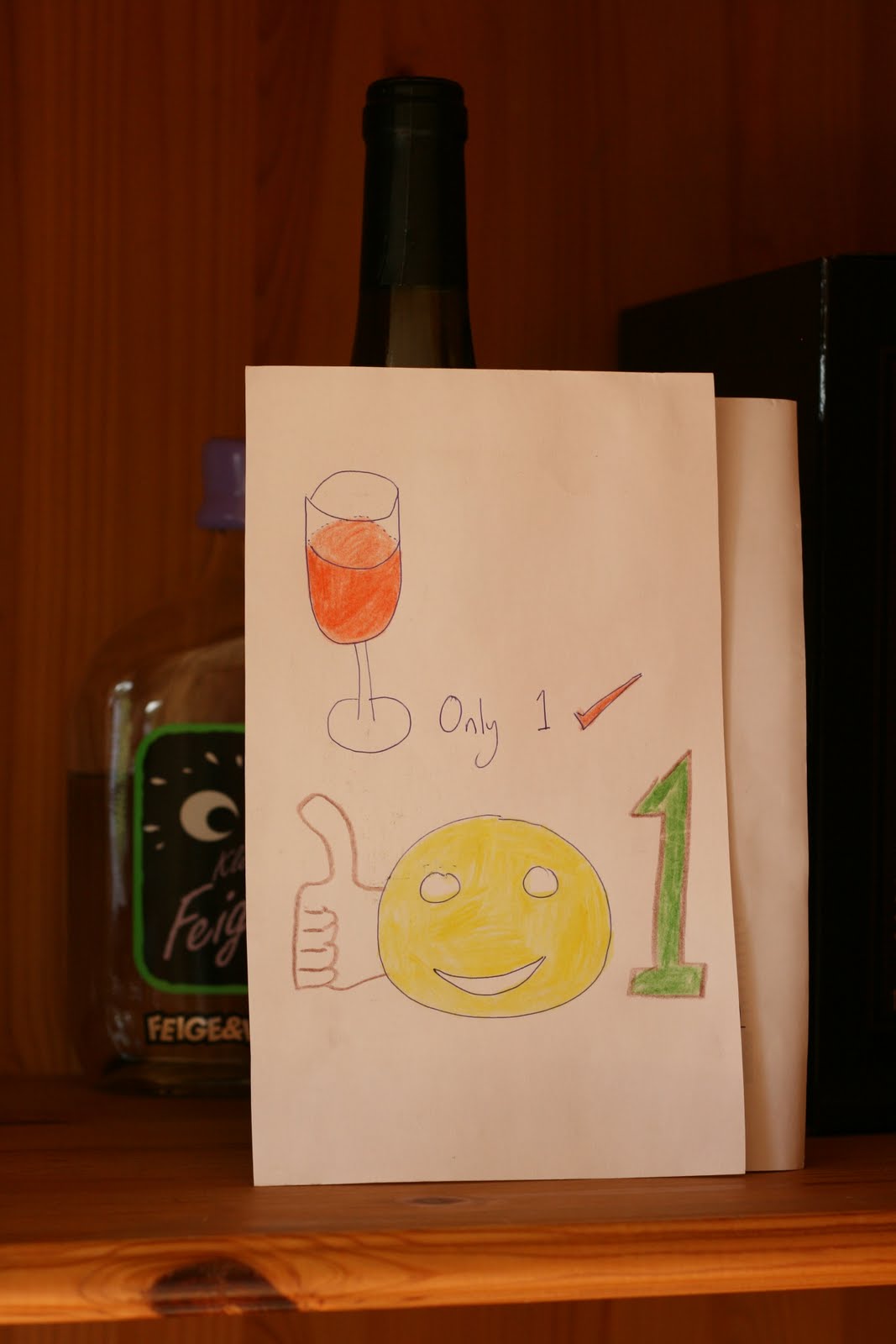 Trigger Two
Reminds me to congratulate myself for only drinking one drink. This is a new habit and if it’s going to replace the old habit I need to enjoy it and celebrate it.
I added this one later as I noticed that I wasn’t always congratulating myself for stopping at one.
Celebrating 'good behaviour' is important as it’s going up against habits that have lasted twenty five years or more.
Conclusion
Triggers have consistently kept my mind on ‘moderation’. They helped me get off to a great start and have reminded me at the right time and place so that I can practice moderation. I had the motivation (the right intention) before but it was never consistent enough to really change my drinking habit.
Now, after five weeks, not only do I always think before I drink in my home but when I'm out this new behaviour is also present. I have said no to drinks and free ones at that. I’ve really got to a stage where I’ve thought about my habit quite deeply and I’m changing my views and associations on drinking which should have a lasting effect.
When you want to change a habit, be it drinking more moderately, stop smoking or eat better, use triggers to get you think and take action at the right time and place. Use triggers to keep you consistent. Once you're consistent, your new habit starts to take root. It starts to be become automatic.
Wednesday, 12 October 2011
The moderate Drinker
What’s in it for you?
Heavy drinkers, there’s a lot in it for you! How about a better sex life; better relationships; a better self-image; being more productive; saving money; being a sexy rebel; better health; more go; being a leader, how to cut down and ultimately for a lot of heavy drinkers a new ‘take it or leave it’ attitude towards drink (you can be in control of your drinking rather than the other way round).
Why?
You already know the answer to this one. The government, the health authority, your family, perhaps even your partner are constantly reminding you of the dangers and drawbacks of drinking too much. They can be annoying but you know they are right. And just in case you’ve forgotten, here are some reminders.
Hangovers – these are nasty things and when you moderate your drinking you can avoid them altogether.
Time – I’m not talking about the fun times, the parts where you are socializing with friends or getting close to a love one, I’m talking about the time after you drink. Your weekend, your free time, the time you put aside to write your novel, to practice your punches, to learn new dance steps etc. Drinking too much can ruin how you use your free time. Do you want to be left with just work-time, drunk time and recovery time?
Focus – When I was in my twenties, my focus was on the night. I associated this with the good times, socializing, women, and lots of fun. It was an expensive focus as I didn’t put in much effort with my career, things that I love doing outside the bar and many other things, like my family. Become a moderate drinker and your focus will probably get stronger and be more on what’s important.
Health – Heavy drinking is bad for you. Bad for your liver. Bad for your brain. Bad for your mood. Bad if you are trying to start a family. And probably bad in many other ways too.
Other areas of life that could change for the better if you become a moderate drinker – relationships, productivity, self-image, etc.
It’s not about Will Power – it’s about habit change
Too many people think they can change themselves and the world though ‘will-power’. For most people, relying on will-power sets them up for failure. Habit change is more than just will-power.
Habit Changers that helped and influenced my transition to being a moderate drinker.
BJ Fogg
Three elements of habit change
• Motivation (will-power)
• Ability
• Triggers
BJ Fogg – underlying approach to habit change
• Make change as easy as possible
• Take small steps towards your goal
• Motivation is the least important element of change.
• Celebrate ‘victories’ (drinking water in a pub)
Leo Babauta from Zen Habits
Approach
• Understand your habit, what are the triggers for your habit, where and when does it happen.
• Make small and easy changes
• Develop half habits – rather than an all or nothing approach, constantly try to move towards your goal. Failure is feedback.
• Tackle one habit at a time.
New Skills
The great thing about becoming a moderate drinker; you have to start doing things differently. If you’re a heavy drinker, some new skills that you might learn are;
• To say no to a drink.
• Understand how and when you are drinking.
• Stop yourself.
• Congratulate yourself when you say no and stop yourself.
• Order water with a round/drink.
• Drink water in a pub.
• Disassociate being sociable, having a laugh, feeling open with drink and associate these things with yourself/being your friends.
• Associate hangovers, being down, being lazy more strongly with heavy drinking.
A lot of these skills are pretty basic, like drinking water in a pub, but they are new to many heavy drinkers.
The author
I was a heavy drinker for twenty five years. I started binge drinking when I was 16. Getting drunk seemed so much fun. It was such a release. My heaviest drinking years were my college years where I was almost always drunk in the evenings. I puked up a lot and generally felt unwell. I continued dinge drinking through my twenties where my focus was more on the night than the day, at the expense of a career. In my thirties binge drinking continued but was starting to be replaced by heavy drinking in the house. In my early forties, most of my drinking was in the home. Then I saw this video on the brain 'How to improve your brain.' (This is part 1 of 7 - I'm not sure which one alcohol is a focus) and decided it was time for a change.
It took me twenty five years to change. To be honest, I’m still changing. I started on 3rd September 2011 and my new habits are still babies compared to my twenty five year old heavy drinking habit. It’ll be an on-going process, at least until the end of this year but I’m confident that change will be permanent. Actually, I’m surprised at how easy it has been so far!
Heavy drinkers, there’s a lot in it for you! How about a better sex life; better relationships; a better self-image; being more productive; saving money; being a sexy rebel; better health; more go; being a leader, how to cut down and ultimately for a lot of heavy drinkers a new ‘take it or leave it’ attitude towards drink (you can be in control of your drinking rather than the other way round).
Why?
You already know the answer to this one. The government, the health authority, your family, perhaps even your partner are constantly reminding you of the dangers and drawbacks of drinking too much. They can be annoying but you know they are right. And just in case you’ve forgotten, here are some reminders.
Hangovers – these are nasty things and when you moderate your drinking you can avoid them altogether.
Time – I’m not talking about the fun times, the parts where you are socializing with friends or getting close to a love one, I’m talking about the time after you drink. Your weekend, your free time, the time you put aside to write your novel, to practice your punches, to learn new dance steps etc. Drinking too much can ruin how you use your free time. Do you want to be left with just work-time, drunk time and recovery time?
Focus – When I was in my twenties, my focus was on the night. I associated this with the good times, socializing, women, and lots of fun. It was an expensive focus as I didn’t put in much effort with my career, things that I love doing outside the bar and many other things, like my family. Become a moderate drinker and your focus will probably get stronger and be more on what’s important.
Health – Heavy drinking is bad for you. Bad for your liver. Bad for your brain. Bad for your mood. Bad if you are trying to start a family. And probably bad in many other ways too.
Other areas of life that could change for the better if you become a moderate drinker – relationships, productivity, self-image, etc.
It’s not about Will Power – it’s about habit change
Too many people think they can change themselves and the world though ‘will-power’. For most people, relying on will-power sets them up for failure. Habit change is more than just will-power.
Habit Changers that helped and influenced my transition to being a moderate drinker.
BJ Fogg
Three elements of habit change
• Motivation (will-power)
• Ability
• Triggers
BJ Fogg – underlying approach to habit change
• Make change as easy as possible
• Take small steps towards your goal
• Motivation is the least important element of change.
• Celebrate ‘victories’ (drinking water in a pub)
Leo Babauta from Zen Habits
Approach
• Understand your habit, what are the triggers for your habit, where and when does it happen.
• Make small and easy changes
• Develop half habits – rather than an all or nothing approach, constantly try to move towards your goal. Failure is feedback.
• Tackle one habit at a time.
New Skills
The great thing about becoming a moderate drinker; you have to start doing things differently. If you’re a heavy drinker, some new skills that you might learn are;
• To say no to a drink.
• Understand how and when you are drinking.
• Stop yourself.
• Congratulate yourself when you say no and stop yourself.
• Order water with a round/drink.
• Drink water in a pub.
• Disassociate being sociable, having a laugh, feeling open with drink and associate these things with yourself/being your friends.
• Associate hangovers, being down, being lazy more strongly with heavy drinking.
A lot of these skills are pretty basic, like drinking water in a pub, but they are new to many heavy drinkers.
The author
I was a heavy drinker for twenty five years. I started binge drinking when I was 16. Getting drunk seemed so much fun. It was such a release. My heaviest drinking years were my college years where I was almost always drunk in the evenings. I puked up a lot and generally felt unwell. I continued dinge drinking through my twenties where my focus was more on the night than the day, at the expense of a career. In my thirties binge drinking continued but was starting to be replaced by heavy drinking in the house. In my early forties, most of my drinking was in the home. Then I saw this video on the brain 'How to improve your brain.' (This is part 1 of 7 - I'm not sure which one alcohol is a focus) and decided it was time for a change.
It took me twenty five years to change. To be honest, I’m still changing. I started on 3rd September 2011 and my new habits are still babies compared to my twenty five year old heavy drinking habit. It’ll be an on-going process, at least until the end of this year but I’m confident that change will be permanent. Actually, I’m surprised at how easy it has been so far!
Subscribe to:
Posts (Atom)